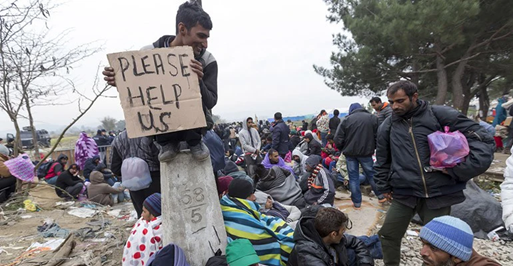
The day exists in 2026 against the backdrop of one of the most substantial global refugee crises in modern history. The UNHCR has estimated more than 100 million people worldwide are currently forcibly displaced — including refugees who have crossed international borders, internally displaced people, and asylum seekers. The conflicts producing this displacement — in Ukraine, Sudan, Syria, Afghanistan, Yemen, Myanmar, the Democratic Republic of Congo — have made refuge one of the central global moral and political questions of the present moment.
For Jonathan’s Circle, the day carries particular weight in 2026. The Circle has members from refugee backgrounds, members who are themselves immigrants under various status categories, and members whose work professionally or as volunteers involves refugee resettlement and advocacy. The day has particular resonance for the broader LGBTQ+ community given the substantial population of LGBTQ+ people who have fled persecution in countries where openly gay or transgender life remains dangerous or impossible.
History
The concept of refugee status as a distinct international legal category emerged after World War II in response to the massive displacement caused by the war and the Holocaust. The 1951 Refugee Convention established the international legal definition of a refugee — a person who, “owing to a well-founded fear of being persecuted for reasons of race, religion, nationality, membership of a particular social group, or political opinion,” is outside their country of nationality. The 1951 Convention and its 1967 Protocol remain the foundational documents of international refugee law. The UN High Commissioner for Refugees (UNHCR) was established in 1950 to coordinate the international response.
World Refugee Day was originally proposed as African Refugee Day, observed in many African countries to mark the 1969 OAU Refugee Convention. In December 2000, the UN General Assembly formally designated June 20 as World Refugee Day, with the first formal observance on June 20, 2001 — the fiftieth anniversary of the 1951 Refugee Convention.
The LGBTQ+ refugee experience deserves particular attention. The 1951 Convention’s reference to “membership of a particular social group” has been interpreted to include sexual orientation and gender identity, providing a legal basis for asylum claims based on anti-LGBTQ+ persecution. The United States formally recognized sexual orientation as a basis for asylum in 1990. The asylum process for LGBTQ+ claimants is often particularly demanding, requiring claimants to document persecution that often occurs in private. Organizations like ORAM, Rainbow Railroad, and LGBTQ+ asylum legal services in major American cities have built substantial supporting infrastructure.
Observances
UNHCR-coordinated events are held in countries around the world on or near June 20, ranging from major public events in capital cities to smaller community-organized observances in refugee-receiving cities. Refugee resettlement organizations in the United States and other receiving countries typically use the day for fundraising, public education, and volunteer recruitment — the International Rescue Committee, HIAS, Lutheran Immigration and Refugee Service, U.S. Committee for Refugees and Immigrants, and many regional agencies.
Religious observances are widespread across Christian, Jewish, Muslim, and other communities active in refugee resettlement. Cultural events featuring refugee voices have become a major feature in many American cities: literary readings by refugee authors, film screenings, art exhibitions, and panel discussions featuring refugees telling their own stories. The deliberate centering of refugee voices — rather than the centering of those who serve refugees — has become an important principle.
Political advocacy events often coincide with the day, with refugee rights organizations using the visibility to advance policy priorities — raising the annual refugee admissions ceiling, expanding asylum protections, opposing detention policies, and addressing the specific concerns of LGBTQ+ refugees, women refugees, and refugees with disabilities.
Male Perspective
For Circle members who are themselves from refugee backgrounds, this is your day, and the Circle holds you in particular gratitude. The work of fleeing a country where staying was no longer possible, of navigating the complicated international refugee determination process, of arriving in a country whose language and customs you may not have known, of rebuilding a life from the most limited starting position — this is among the most demanding work any person undertakes.
For gay refugee Circle members specifically, the additional dimensions are often substantial. The legal process for LGBTQ+ asylum claims is particularly demanding, and telling the most intimate parts of one’s life history to asylum officers as part of the legal process can itself be retraumatizing. The community of LGBTQ+ refugees and asylees in American cities is a real and important community, and the Circle has members who are part of it.
For Circle members descended from refugees of earlier generations — children and grandchildren of Holocaust survivors, of Southeast Asian boat people, of Soviet Jewish refugees, of Cuban refugees, of Bosnian refugees, of Vietnamese refugees — the day is an occasion to remember the journey that made your family’s American life possible.
For Circle members whose own lives are not directly touched by refugee experience but who are concerned about the broader work, the day is an opportunity for substantive engagement. Refugee resettlement organizations in nearly every American city welcome volunteers and donors. The broader political dimension that 2026 makes particularly salient: the American refugee admissions program has been continuously contested across recent administrations, and the day is a natural moment to consider what posture you want to take in the broader public conversation. A practical action: donate to a refugee resettlement organization or LGBTQ+ asylum services organization. Read one book by a refugee author this month. Attend an event in your community if accessible.
Summary
World Refugee Day honors the more than one hundred million people currently forcibly displaced from their homes and the broader work of refuge as a principle of international moral responsibility. The Circle holds its refugee members in particular gratitude and holds the broader question of public commitment as work the day asks every member to consider.