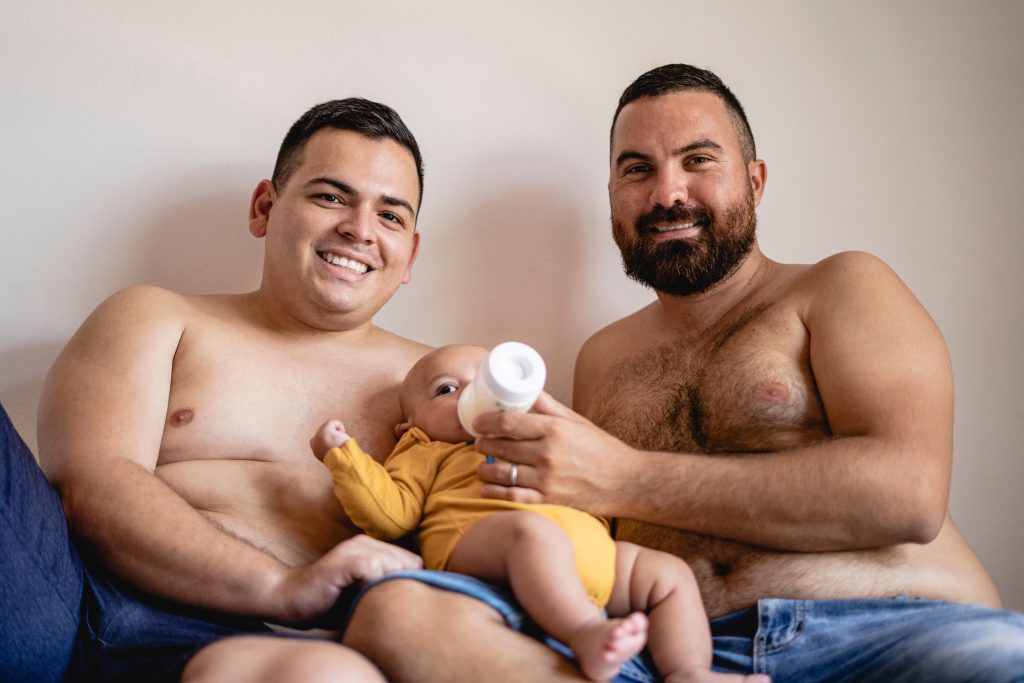
The holiday is one of the more emotionally complicated days on the American calendar. Where Mother’s Day has been culturally elaborate for over a century, Father’s Day has often functioned as the smaller, less elaborate, more uncomfortably negotiated companion holiday. The relative cultural quiet of Father’s Day mirrors something real about the cultural treatment of fatherhood itself — less sentimentalized, more directly engaged with the difficult and often unfinished work of paternal relationships.
For Jonathan’s Circle, Father’s Day is one of the most directly resonant days of the year. The relationships men have with their fathers, with their own children, with the older men who shaped them, and with the younger men they have shaped in turn are central to the spiritual and emotional terrain the Circle inhabits. The day holds the full range: the good relationships, the wounded ones, the lost ones, and the unfinished ones.
History
Father’s Day traces its origin to early-twentieth-century efforts to establish a paternal counterpart to Mother’s Day. The most widely cited founding figure is Sonora Smart Dodd of Spokane, Washington, who began advocating for the observance in 1909 in honor of her father William Smart, a Civil War veteran who raised six children alone after his wife’s death. The first Father’s Day celebration was held in Spokane in June 1910.
The path to federal recognition was substantially longer than for Mother’s Day. President Woodrow Wilson supported the day in 1916, President Calvin Coolidge in 1924, but congressional efforts repeatedly stalled. President Lyndon Johnson issued the first presidential proclamation in 1966, and President Richard Nixon signed the legislation making Father’s Day a permanent national observance in 1972.
The contemporary expansion of who counts as a father has been substantial. Same-sex male couples raising children together — through adoption, surrogacy, or other pathways — have made openly gay fathers a familiar feature of American family life in a way that would have been impossible a generation ago. The 2015 Obergefell decision gave gay fathers full legal standing in their relationships with their children in most jurisdictions. Father’s Day for two-dad families is now a routine American observance. Stepfathers, foster fathers, and adoptive fathers have always been part of American family life, and contemporary observances increasingly acknowledge the variety of paternal relationships beyond biology.
Observances
Family gatherings centered on the father are the central observance of the day. Children of various ages honor their fathers with time, attention, and small gifts. Restaurant meals are a major commercial feature: Father’s Day is one of the larger restaurant days of the American year. Outdoor and sporting activities — fishing, baseball games, golf — have become traditional options, though the association of fatherhood with outdoor activity is itself culturally constructed and excludes many fathers whose pleasures run elsewhere.
Religious observances mark the day in many congregations, though the pattern is uneven: some make substantial fuss about Father’s Day, others almost none, and there is genuine theological discomfort in some traditions with the holiday’s framing.
Memorial observances are an increasingly significant part of the day. For the many men whose fathers have died, Father’s Day is a day of remembering rather than celebrating, with cemetery visits, photographs, and stories told to younger family members. Chosen-family observances have become significant, particularly for LGBTQ+ communities and others whose biological family relationships are estranged or limited — honoring the older men who have served paternal functions even without biological connection.
Male Perspective
Father’s Day, like Mother’s Day, is rarely uncomplicated for Circle members. The relationships men have with their fathers are, across any group of men sitting in a circle together, enormously varied: some easy, some hard, some long-resolved, some unfinished, some closed by death, some still being negotiated decades into adulthood.
Many Circle members describe their fathers in mixed terms. The father who was distant in the way many mid-twentieth-century American fathers were taught to be distant. The father whose own struggles — with alcohol, with mental health, with the demands of work — made him less present than he might have been. The father whose conservative religious or political commitments came into conflict with a son’s eventual openly gay life, or with a son’s questioning of the family’s religion. The father whose actual abuse has shaped a son’s adult life in ways decades of work have only partly addressed. And the good fathers — because there are also good fathers, in significant numbers, in every generation — who showed up for the games and the difficult conversations, who taught a skill or a way of being in the world.
For gay Circle members, the work of being a gay son to a father shaped by his own generation has been some of the most important emotional work of many men’s adult lives. The coming-out conversation, the years of negotiation, the slow shift, the eventual welcoming (often) of the partner into the father’s home. Many Circle members have stories of this work they would not trade for any easier history; many others have stories of fathers who never made the journey. The Circle holds both kinds of story.
For Circle members who are themselves fathers — by birth, adoption, surrogacy, or step-parenting — the day is also yours. For Circle members whose fathers were absent by death or abandonment or addiction, the cultural pressure to celebrate a father one never knew can be real, and the Circle holds this experience with respect. A practical observance: if your father is alive and the relationship makes it possible, make the call. If your father is dead, hold him in mind. If you are yourself a father, receive what your children offer with as much grace as you can. If you have been the older male presence in younger men’s lives — mentor, uncle, godfather — know that you also belong in the day’s honor.
Summary
Father’s Day holds the full weight of the paternal relationship — the good fathers, the wounded ones, the lost ones, and the ones still being negotiated. The day asks not for performance but for honest acknowledgment of the relationships that made the men we became.