
- Memorial Day
Overview
Memorial Day is the U.S. federal holiday observed on the last Monday in May to honor American military personnel who died in service to the country. In 2026 it falls on Monday, May 25. The holiday is distinct from Veterans Day, which honors all who have served, living and dead; Memorial Day specifically commemorates those who did not return. The distinction matters and is sometimes blurred even by well-meaning observers.
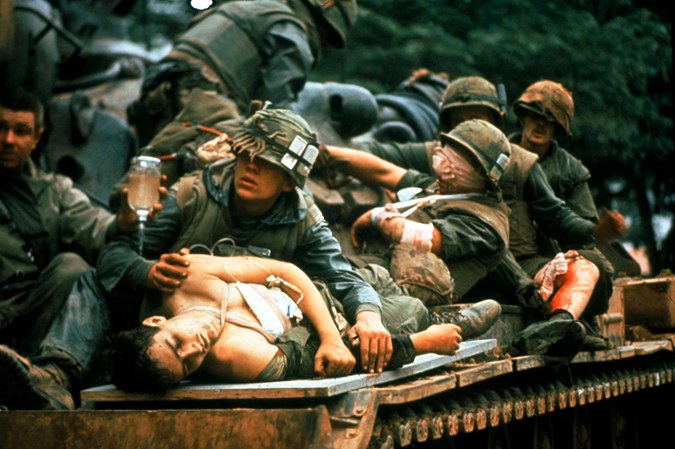
The day functions in American life as both a solemn remembrance and an unofficial start of summer. Most Americans experience it as a long weekend featuring barbecues, parades, and the opening of pools and beaches. The juxtaposition is uneasy and has been remarked on critically for as long as the holiday has existed: a day of honoring the dead has become a day of recreation. Both elements are now permanent features.
For gay men, Memorial Day carries layers that are often unaddressed in mainstream observance. American military service has had a particular history for queer men — long exclusion, eventual inclusion, the deaths of gay soldiers whose families could not always be informed by the partners who actually loved them. Honoring the day with awareness of that history is part of what it means for the Circle to mark it.
History
Memorial Day grew out of the American Civil War. The war’s casualty toll — approximately 750,000 Union and Confederate dead — was unlike anything the country had experienced or would experience again until the twentieth century. In the years immediately following Appomattox, communities across the country began organizing local days to decorate the graves of fallen soldiers. These observances were sometimes called Decoration Day. The earliest documented organized observance was in Charleston, South Carolina, on May 1, 1865, when freed Black residents held a ceremony at the graves of Union prisoners of war who had died in a Confederate prison camp. The ceremony included a procession, a memorial sermon, and the planting of flowers on the graves. It is, by any honest accounting, the first Memorial Day.
Other early observances followed in both Northern and Southern communities, usually focused on each side’s own dead. In 1868, General John A. Logan, commander of the Grand Army of the Republic (the principal Union veterans’ organization), issued a national call for May 30 to be observed as Decoration Day. Communities across the North adopted the date. Southern states for decades observed separate Confederate Memorial Days on different dates — a practice that survives in some form in several Southern states even now.
The unification of Decoration Day into a single national observance gathered pace through the late nineteenth and twentieth centuries. After World War I, the holiday’s scope expanded to include Americans killed in all wars, not just the Civil War. The name Memorial Day gradually replaced Decoration Day in common usage by mid-century. In 1971, the Uniform Monday Holiday Act moved the observance from the fixed date of May 30 to the last Monday in May, creating the three-day weekend that has shaped the holiday’s current cultural feel.
The casualty toll the holiday now commemorates has continued to grow. Memorial Day honors the dead of every American war: the Revolutionary War, the War of 1812, the Mexican-American War, the Civil War, the Spanish-American War, World War I, World War II, the Korean War, the Vietnam War, the Persian Gulf War, the wars in Afghanistan and Iraq, and the smaller conflicts and peacekeeping operations in between. The total American military dead across this span is well above a million.
Observances
most formal observances of Memorial Day take place at military cemeteries. Arlington National Cemetery hosts a presidential ceremony at the Tomb of the Unknown Soldier, with the laying of a wreath and a national moment of remembrance. American flags are placed at every grave at Arlington in advance of the holiday — a tradition called Flags In, performed by soldiers of the 3rd U.S. Infantry Regiment. Similar ceremonies happen at military cemeteries across the country.
Many American towns hold Memorial Day parades, often featuring veterans, active service members, military bands, and civic organizations. Wreaths are laid at local war memorials. In some communities, the names of the local war dead are read aloud. American flags are flown at half-staff from sunrise until noon, then raised to full staff for the rest of the day — a custom that few observe correctly but that is the formal protocol.
In 2000, Congress passed the National Moment of Remembrance Act, asking all Americans to pause for one minute at 3:00 PM local time on Memorial Day to remember the fallen. The pause is widely ignored but quietly observed by some.
The unofficial observances are well known: outdoor cookouts, the opening of summer travel season, retail sales, the running of the Indianapolis 500, and the start of the major-league baseball season’s real summer rhythm. These are now permanent features of the holiday and complaining about them has become its own genre. A more useful response is to add the solemn observance back rather than try to remove the recreational one. A wreath on a veteran’s grave does not preclude a hamburger that evening.
For those wanting to mark the day with substance, the simplest practices remain: visit a military cemetery; read the names of war dead from your community or family; attend a local ceremony; pause at 3:00 PM; donate to organizations that support military families and the wounded.
Male Perspective
Memorial Day asks Circle members to hold a complicated history. American military service has been a continuous thread through every generation in the Circle’s membership; many of us are veterans, many have lost partners or family members in service, and the day matters in a particular and direct way to those who have personally borne its weight. The Circle holds those losses with the seriousness they deserve.
The day also asks the Circle to hold a particular and less-acknowledged piece of military history that runs alongside the visible one. American military service was officially closed to openly gay men until 2011, when Don’t Ask, Don’t Tell was repealed. Before then, and going back through every war the country has fought, gay men served — and died — in concealment. The Civil War had its quiet pairings of soldiers whose letters survive. World War II had its flowering of gay social networks within the military, men finding each other in barracks and on shore leave. Vietnam, Korea, and the Cold War decades had their quiet ranks of men whose families never knew everything that was true about their sons or husbands. Many of those gay men died in service to a country that would not acknowledge their full lives, and many of their partners could not be informed of the deaths through official channels, could not attend the funerals as spouses, could not collect the survivor benefits. Memorial Day honors all those dead equally now, on paper. In practice, the silence around the gay men among them remains.
The repeal of Don’t Ask, Don’t Tell in 2011 and the subsequent permission for openly transgender service have changed the present, but they cannot retroactively unseal the past. The Circle’s honest observance of Memorial Day includes the broader American military dead — held with the gravity any honest American observance owes them — and a particular act of memory for the gay soldiers who lived and died in concealment, whose love was part of their service even if it was never named in their service records.
There is also a particular American history of gay men who served openly in the years before formal permission — Leonard Matlovich, who challenged the Air Force in 1975 and whose tombstone reads, in his own words, “When I was in the military they gave me a medal for killing two men and a discharge for loving one.” His grave at Congressional Cemetery in Washington, D.C., is a Memorial Day pilgrimage site for veterans and their friends. Visiting it, or reading his story, is one good way to mark the day.
A simple practice for the Circle: at 3:00 PM on Memorial Day, pause for the minute that the law asks for, and add to it. Hold the American war dead in their full company — the ones the country has visibly honored and the ones whose lives it could not fully see. Memorial Day is a chance to refuse to choose between them.
Summary
Memorial Day is an obligation of memory — a call to hold, however briefly, the full weight of what war costs and what human courage looks like in its most extreme and terrible forms.
Date: Last Monday in May (May 26, 2026)