
- Harvey Milk Day
Overview
Harvey Milk Day, observed on May 22, honors the life and legacy of Harvey Bernard Milk, the first openly gay elected official of any major city in the United States. Milk served on the San Francisco Board of Supervisors from January 1978 until his assassination in November of that year. He was 48 years old when he died. The date of the holiday is his birthday — May 22, 1930.
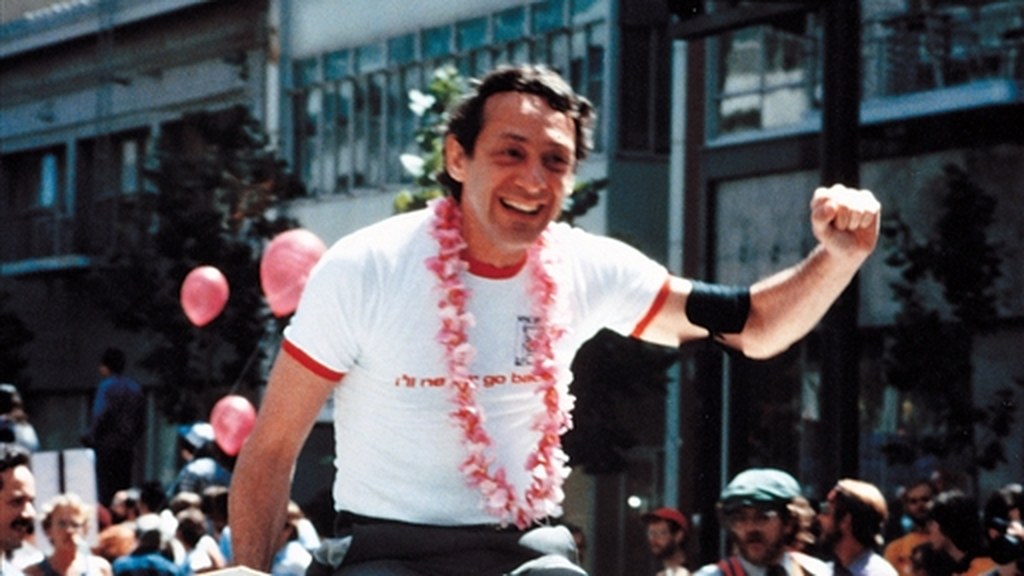
California formally established Harvey Milk Day as a state-recognized day in 2009, following years of advocacy. Public schools in California are encouraged to observe the day with educational programs about Milk’s life and the broader history of LGBTQ+ civil rights. The day is widely observed across the United States in LGBTQ+ communities as a moment to honor early movement leaders and to recommit to the work that remains.
For gay men particularly, Harvey Milk Day is a holiday of inheritance. Milk represents one of the first nationally visible models of an openly gay public life lived without apology, and the political vision he articulated — that gay people had to come out, had to be visible, had to claim ordinary American politics as their own — shaped the movement that followed.
History
Harvey Milk was born in Woodmere, New York, to a middle-class Jewish family. He served in the Navy during the Korean War, worked briefly in finance, and eventually moved to San Francisco in 1972. He opened a camera shop, Castro Camera, on Castro Street, which became an informal community center as the neighborhood transformed into a gay enclave during the early seventies.
Milk ran for the Board of Supervisors three times before winning. His first two campaigns, in 1973 and 1975, lost decisively but built his political base; a redrawing of district lines for the 1977 election created a district that included the Castro and gave him a feasible path. He won that race with significant grassroots support and was sworn in in January 1978, becoming the first openly gay elected official of any major American city.
In office Milk worked across coalition lines, supporting tenant protections, daycare, public transit, and small business interests alongside his explicitly gay-rights advocacy. His most lasting legislative achievement was the city’s gay civil rights ordinance, passed in March 1978, which barred discrimination on the basis of sexual orientation in employment and housing. He was also a leading public opponent of Proposition 6, the Briggs Initiative, which would have banned gay men and lesbians from teaching in California public schools. The proposition was defeated in November 1978, in significant part because of Milk’s sustained public campaign against it.
On November 27, 1978, Milk was assassinated in his City Hall office along with Mayor George Moscone by Dan White, a former supervisor who had recently resigned and been refused reinstatement. White was convicted of voluntary manslaughter rather than murder, served five years of a seven-year sentence, and committed suicide in 1985. The leniency of his sentence — attributed in popular memory to the so-called Twinkie defense — sparked the White Night Riots in San Francisco and remains one of the defining injustices of LGBTQ+ political memory.
After his death, Milk’s public stature only grew. He was posthumously awarded the Presidential Medal of Freedom in 2009 by President Obama. The 2008 film Milk, in which Sean Penn won an Academy Award for portraying him, brought his story to a younger generation. A U.S. Navy ship, the USNS Harvey Milk, was christened in 2021. Schools, parks, plazas, and streets bear his name across the country, and his image — sometimes the famous photograph of him grinning in his ill-fitting suit, sometimes a stylized graphic — has become one of the most recognized icons of American gay history.
Observances
Harvey Milk Day is observed most prominently in California public schools, where teachers are encouraged to incorporate Milk’s life and LGBTQ+ history into their lessons. Curriculum resources are widely available. The day is also marked at the federal level by various agencies and at LGBTQ+ community centers nationwide.
In San Francisco, the Castro neighborhood holds events at Harvey Milk Plaza and along Castro Street. The Harvey Milk Civil Rights Academy, an elementary school named in his honor, holds programs for its students. The GLBT Historical Society Museum, also in the Castro, traditionally features programming on Milk’s life around the date.
Beyond institutional observance, the day is widely marked individually and in community: by reading or rereading The Mayor of Castro Street, Randy Shilts’s 1982 biography that remains the standard work; by watching the 1984 documentary The Times of Harvey Milk (which won an Academy Award) or Gus Van Sant’s 2008 film; by visiting Castro Street if you live near it or have a chance; by donating to LGBTQ+ political and civil rights organizations; by simply telling Milk’s story to someone younger who has not heard it.
The phrase most associated with Milk — and most often invoked on this day — is from his last political testament, recorded on tape against the possibility of his assassination: “If a bullet should enter my brain, let that bullet destroy every closet door.” The message is uncompromising. Milk believed the single most important political act available to gay people was coming out: telling parents, telling co-workers, telling neighbors, refusing the comfortable silence. Visibility, he argued, was the only path to durable rights.
Male Perspective
Harvey Milk Day matters to the Circle in a way that is hard to overstate. Milk was, before almost anyone else in American politics, a model of an openly gay public life that did not require translation, apology, or coding. He was funny, ambitious, sexually active, politically pragmatic, and entirely unwilling to keep his orientation private as the price of office. He demonstrated that a gay man could win elections, govern, build coalitions, and matter — not in spite of being gay but with that fact fully integrated into who he was. Whatever a Circle member’s own orientation, the political model Milk left behind is one any of us can study and admire.
For older men in the Circle, Milk’s death is a remembered event. Many were already adults in 1978 and felt the assassination as a personal blow at a time when openly gay leadership barely existed. The march down Market Street that evening, fifty thousand people walking in silence with candles, remains for many the defining image of community grief and resolve of a generation. The men who lived through it carry that memory and pass it forward.
For younger Circle members who have known an openly gay public sphere as ordinary fact, Milk represents the path that made much of the present possible. He argued for coming out as a moral and political duty at a moment when doing so could cost a man his job, his family, his housing, and sometimes his life. The world in which a gay man can be a city councilor, a CEO, a senator, a cabinet member, a starting quarterback, was built on the backs of men like Milk who refused the closet first. The world in which straight Circle members can also live more honest, less constricted male lives owes Milk something too — every public expansion of what a man can be opens room for everyone.
Milk’s vision was not narrow. He spoke for renters, immigrants, the elderly, working people, small business owners. He understood that gay liberation was inseparable from broader questions of justice and economic dignity. That coalition logic remains his deepest political legacy: not the gay rights movement as an interest group but the gay rights movement as part of a larger commitment to human equality. For Circle members thinking about how to live out our spiritual and political lives in our own moment, Milk’s practice still instructs.
A simple way to honor the day: tell someone something true about who you are. The smallest disclosure of a hidden truth, even within yourself, is in the spirit of what Milk asked for. He believed every honest revelation made the next one easier for someone else. Forty-eight years after his death, we are still proving him right.
Summary
Harvey Milk Day is a feast of visibility, courage, and the refusal to be erased — a celebration of the full, unapologetic self that chooses to be seen even when hiding would be safer.
Date: May 22