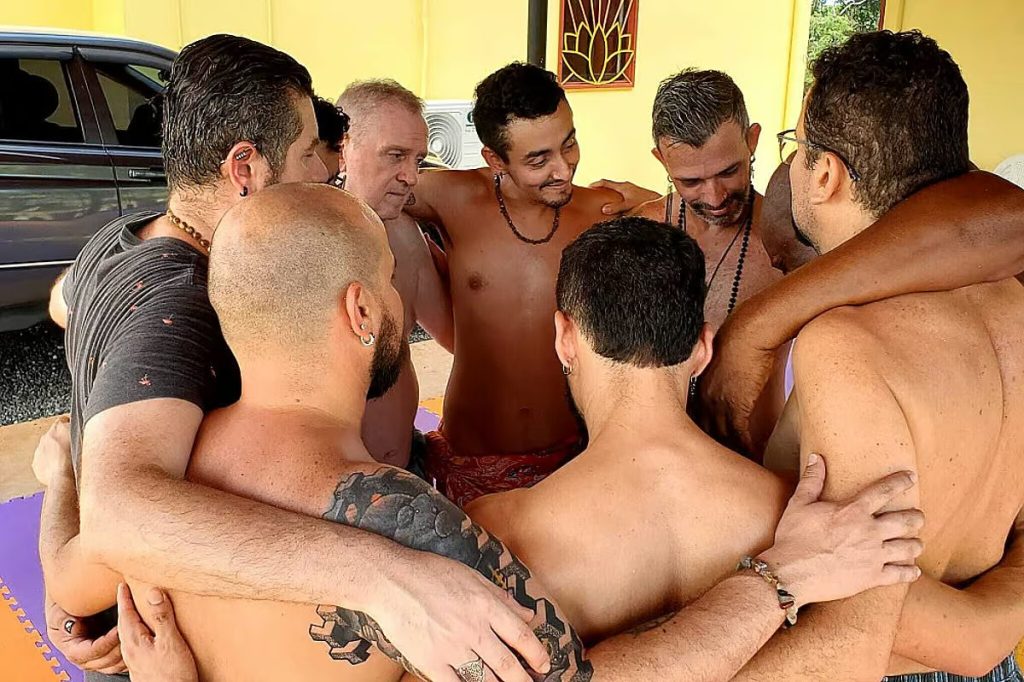
For the men of Jonathan’s Circle, November 19 falls at a particularly resonant moment: the day before the Transgender Day of Remembrance, in the middle of Transgender Awareness Week, and in the same month as both All Souls Day and the national conversation around gender-based violence that peaks on November 25.
History
The current observance was founded in 1999 by Dr. Jerome Teelucksingh, a history professor at the University of the West Indies in Trinidad and Tobago. He chose November 19 in honor of his father’s birthday, and because the date also coincides with the anniversary of the day in 1989 when Trinidad and Tobago’s national football team — known as the “Strike Squad” — drew a game against the United States, a moment that temporarily united the country across its many divisions. Teelucksingh wanted a day that was similarly unifying: not a day against anyone, but a day for men’s health, boys’ futures, and the model of positive masculinity he had learned from his father.
The observance was adopted by India in 2007 and by more than seventy countries in the years since. In 2009, the organizers settled on six official “Pillars” for the day: celebrating the positive value men bring to the world, honoring men’s positive contributions to society, focusing on men’s health and wellbeing, highlighting discrimination against men, improving gender relations and promoting gender equality, and creating a safer, better world for everyone.
The day is sometimes confused with the much older International Women’s Day (March 8), which has roots in the labor movements of the early twentieth century. The two are related but distinct; organizers of International Men’s Day have been consistent that the November 19 observance is not a counter to the March 8 one but a companion.
Observances
In practice the day is marked by local events organized by health organizations, employee groups, religious communities, barbershops, sports clubs, and the many other places men gather. Common themes include men’s mental health, male suicide prevention, prostate and testicular cancer awareness (often paired with Movember, the mustache-growing fundraising movement that runs through the whole month of November), fatherhood, mentorship of boys and young men, and the specific health concerns facing men in particular communities.
Many observances include fundraising walks, panel discussions, free health screenings, and conversations between generations — fathers and sons, elders and young men, mentors and the men they are mentoring. In some places the day is marked by religious services; in others by sports events; in still others by nothing more than a conversation that would not otherwise have happened.
A private observance can be as simple as making the medical appointment you have been putting off, calling a man in your life you have not spoken to in a while, or taking a quiet hour to think about what being a good man means to you right now.
Male Perspective
International Men’s Day is for every man in Jonathan’s Circle, and the founding Pillars of the day name men’s health as a central concern. That concern is specific for all of us.
Across the whole population of men, the numbers are sobering: men die on average several years earlier than women; men account for roughly three-quarters of suicides in the United States each year; men are less likely to seek medical care, mental-health support, or help from friends when things turn hard. Straight brothers in the Circle carry the full weight of these numbers, often reinforced by the quiet cultural rule that a man ought to handle it alone.
For gay, bisexual, and transgender brothers, additional burdens stack on top: higher rates of HIV, higher rates of depression and anxiety, higher rates of substance use, higher rates of certain cancers (especially anal cancer, which still carries stigma even inside the medical system), and the particular health effects that come with navigating hormones, surgery, or a healthcare system that has not always known how to care for trans bodies.
The day is also an invitation to think about what positive masculinity looks like for every one of us. The version of manhood handed down by the broader culture — the one that says a man does not cry, does not ask for help, does not need other men beyond work and sport — does not quite fit any brother in the Circle. Each of us, from a different starting point, has been building something more honest: tenderness without weakness, erotic honesty without shame, friendship across difference, care for our own bodies and the bodies of our brothers, and brotherhood that is chosen as well as inherited.
For a Circle already in the daily work of integrating sex and spirit, November 19 is a natural day to pause, name what the Circle itself represents in this larger conversation about men’s wellbeing, and recommit.
Summary
International Men’s Day asks men to pay attention to their own health and wellbeing and to the kind of men they are becoming. For Jonathan’s Circle, November 19 is a day to claim what we have been building together — a brotherhood that models what positive, honest, embodied masculinity can look like — and to let the day be a reminder of why that work matters.