
- Mother's Day
Overview
Mother’s Day, observed in the United States on the second Sunday of May, is a day set aside to honor mothers and the maternal role. In 2026 it falls on Sunday, May 10. The holiday is observed in many other countries on the same day, and on different dates in others — the United Kingdom, for instance, observes Mothering Sunday in mid-Lent, an older Christian observance with a different lineage.
The day in its modern American form is roughly a century old, established as a federal observance in 1914. It is among the most heavily commercialized holidays of the American year — second only to Christmas in retail spending in some industries — and the original founder of the holiday spent much of the rest of her life arguing publicly against what it had become. That tension between sentiment and commerce is, by now, part of the holiday’s permanent texture.
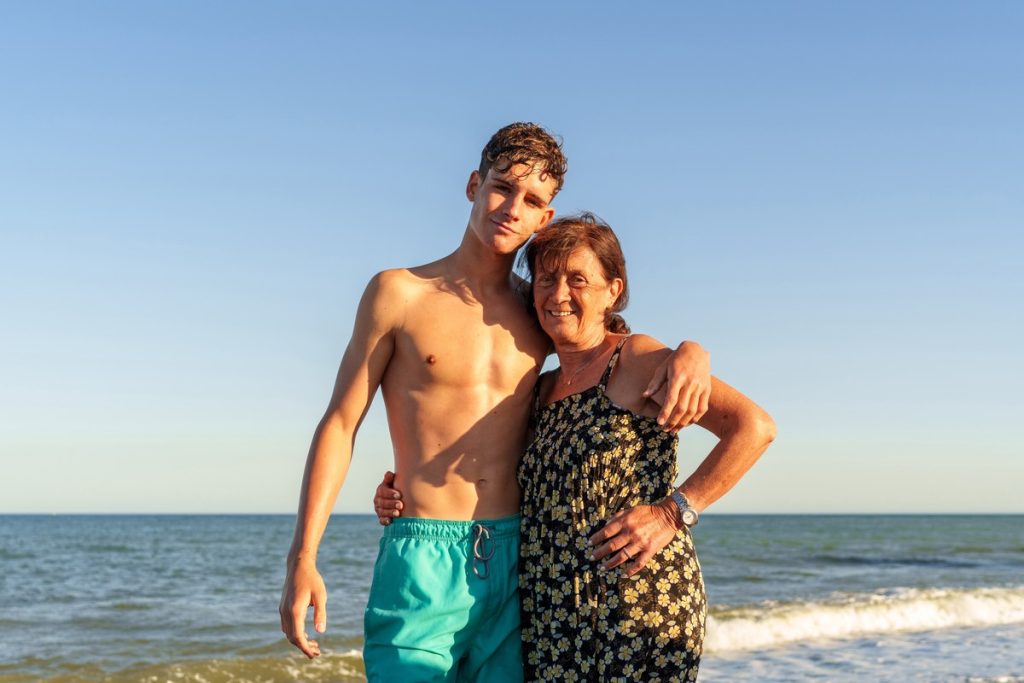
For gay men, Mother’s Day frequently carries weight that the official scripts do not anticipate. Mothers have often been the first or only family members to keep loving us through coming out, the ones whose acceptance arrived first or arrived at all, the ones whose loss — by death or by estrangement — reshapes our lives more than we sometimes admit. The day belongs as much to gay men as to anyone, perhaps more.
History
The American holiday was the work primarily of one person: Anna Jarvis, of Grafton, West Virginia. Jarvis’s mother, Ann Reeves Jarvis, had organized Mothers’ Day Work Clubs during the Civil War to provide care to wounded soldiers from both sides, and after the war led reconciliation efforts between North and South. When Ann Reeves Jarvis died in 1905, her daughter Anna — then in her early forties, never married, deeply close to her mother — began a sustained campaign for a national day of recognition for mothers in honor of her own.
The first Mother’s Day observance she organized was held in 1908 at Andrews Methodist Episcopal Church in Grafton, where her mother had taught Sunday school. Five hundred white carnations — her mother’s favorite flower — were distributed to attendees. The carnation became, and remains, the holiday’s emblem flower, with the convention that white carnations honor mothers who have died and red or pink carnations honor those still living.
Jarvis pursued the campaign with relentless energy through the next several years — letters, lobbying, organized observances in church groups across the country. By 1914, Congress and President Woodrow Wilson formally established Mother’s Day as a federal observance, set for the second Sunday in May.
Almost immediately, the holiday’s commercialization began. Florists, card manufacturers, and confectioners recognized a business opportunity and built marketing campaigns around the date. By the 1920s, Anna Jarvis was actively protesting what her own creation had become. She objected to the printed greeting card, which she felt substituted purchased sentiment for genuine feeling. She objected to the gifts of flowers becoming themselves transactional. She organized boycotts of the flower industry. She was arrested at one Mother’s Day event for disturbing the peace. She spent her own inheritance fighting against the commercial appropriation of the holiday and died in poverty in 1948.
Her cause did not win. Mother’s Day remains one of the largest commercial holidays of the year. The objection she raised — that the day too easily becomes a transaction performed in lieu of relationship — still stands. So does the holiday she created.
Observances
The most common American observances are some combination of: a phone call or visit to one’s mother; a card or flowers (often delivered the day before because florists are overwhelmed by Sunday morning); a meal at a restaurant (Mother’s Day is famously the busiest restaurant day of the American calendar) or a meal cooked at home for the mother; a gift of some kind, ranging in scale from token to substantial.
For families with multiple generations of mothers — a mother and a grandmother and great-grandmother all living — the day often becomes a multi-stop affair, with adult children visiting more than one matriarch in a day or convening them all together. For families divided geographically, the phone call or video call has become standard.
Many churches honor mothers in the Sunday service — by having mothers stand to be recognized, by distributing flowers, by including thanksgivings for mothers in the prayers. Some pastoral traditions are increasingly thoughtful about how this can land for women in the congregation who have lost a child, who could not have children, whose mothers are absent or have died, or who are estranged from their own mothers. The shift toward more inclusive language — honoring all who have given mothering care, biological or otherwise — is one of the genuine improvements of the past decade.
For those whose mothers have died, the day takes on a different shape: visiting the grave, calling siblings to share memories, looking at photographs, making the dishes she made. Grief on Mother’s Day is not a malfunction of the holiday; it is one of its honest meanings. For those whose mothers are alive but estranged, the day can be brutal, and many have learned to shield themselves carefully through it. Both responses are legitimate.
Beyond family observance, organizations that work with mothers — maternal health charities, postpartum support groups, organizations supporting incarcerated mothers, refugee mothers, mothers of murdered children — use the day for fundraising and awareness. Donations in honor of one’s mother are an established and often deeply meaningful form of observance.
Male Perspective
For Circle members, Mother’s Day is rarely uncomplicated and is often one of the most quietly important days of the year. The relationships men have with their mothers are, across the lives of any group of men sitting in a circle together, enormously varied — some easy, some hard, some long-resolved, some unfinished, some long since closed by death or dementia, some still being negotiated. The day puts that variety on display.
Many men in the Circle describe their mothers as the parent who saw them most clearly in childhood, who knew before they did, who chose love when other family members chose distance — a description gay men in the Circle often offer first, and that men of every other configuration also recognize when they hear it. Many describe the long, complicated work of separation from a mother whose attachment was one of the strong and shaping features of their lives, and whose loss — to death, dementia, or estrangement — has reshaped them.
The PFLAG mother — the parent who learned, who showed up, who fought — has a particular and beloved place in the memory of gay men of certain generations, and the work those mothers did over decades, often against their own initial training, is one of the genuine moral achievements of the past half-century. The Circle holds those mothers in particular gratitude. For Circle members whose mothers were that kind of mother — across any of the questions a son might have brought home, not only sexuality — the day is a chance to thank them again.
For Circle members whose mothers did not accept them, or whose relationship with their mother was painful or abusive or absent, the day is a wound that does not close on schedule. The Circle holds you with the awareness that the wound is real, that you are not alone in carrying it, and that the day asks nothing you are not ready to give.
For Circle members who are themselves parents — by birth, adoption, surrogacy, or step-parenting; in conventional or non-traditional family structures — the day raises its own questions. Whether to share the day with the co-parents in the family, to claim it on behalf of one’s own parenting, or to let it pass quietly is a personal calculation. The simplest principle is that mothering is not the same as being a mother, and the day can honor either or both depending on the family.
And for the Circle members who are sons — alive sons of living mothers, sons of dead mothers, sons of estranged mothers, sons whose mothers are unrecognizably altered by age or illness — the day asks something simple. Make the call you are in a position to make. Visit the grave you are in a position to visit. Hold the memory you are in a position to hold. The mothers we have had, whatever they were and however they failed, made the men we became. The day is a chance to acknowledge that without pretending the relationship was anything other than what it was.
Summary
Mother’s Day holds the full weight of origin, love, loss, and the ongoing work of becoming the kind of man who can give and receive care with open hands.
Date: Second Sunday in May (May 11, 2026)