
- Women's History Month
History
Women’s History Month, observed throughout March in the United States, is a dedicated time to honor the contributions, achievements, and struggles of women throughout American history. What began as a local celebration in California has grown into a nationally recognized month inviting reflection on whose stories have been told, whose have been silenced, and what genuine equality requires beyond symbolic recognition. For men committed to spiritual wholeness and authentic partnership, Women’s History Month poses essential questions: how have the women in our lives and lineages shaped who we are, and what does it mean to stand alongside women in their ongoing pursuit of full humanity?
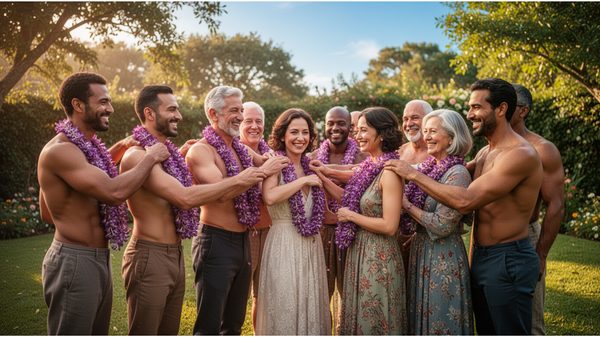
Women’s History Month originated in 1978 when the Education Task Force of the Sonoma County Commission on the Status of Women in California organized a “Women’s History Week” celebration, choosing the week of March 8th to coincide with International Women’s Day. The idea spread rapidly through feminist networks and educational institutions; in 1979, historian Gerda Lerner chaired a fifteen-day conference on women’s history at Sarah Lawrence College that galvanized national organizing efforts.
President Jimmy Carter issued the first presidential proclamation for National Women’s History Week in 1980. Congress passed resolutions designating Women’s History Week annually through the mid-1980s; in 1987, after petition by the National Women’s History Project, Congress expanded the observance to the entire month of March through Public Law 100-9. Since 1995, every president has issued annual proclamations designating March as Women’s History Month, and the National Women’s History Alliance announces yearly themes focusing attention on particular aspects of women’s experience and achievement. The month has roots in earlier feminist activism, including the first International Women’s Day in 1911, which itself emerged from socialist and labor movements demanding women’s suffrage, better working conditions, and equal rights.
Observances
Schools, libraries, museums, and cultural institutions host programs featuring women’s history, literature, art, and achievement—lectures, film screenings, exhibitions, and performances that center women’s voices and experiences often marginalized in mainstream historical narratives.
Many organizations highlight women’s contributions in specific fields: science, medicine, literature, politics, business, sports, arts, and spirituality, recovering stories of women whose achievements were overlooked, attributed to men, or deliberately suppressed.
Reading and study are central practices: individuals and book groups commit to reading works by women authors, studying women’s history, or engaging with primary sources from suffragist speeches to contemporary feminist scholarship. Some observe the month through economic action: supporting women-owned businesses, contributing to organizations advancing women’s rights, or examining personal and institutional practices that perpetuate gender inequality.
The month often prompts conversations about ongoing challenges: the gender wage gap, reproductive rights, workplace harassment, domestic violence, political representation, and the particular struggles facing women of color, immigrant women, LGBTQ+ women, and women with disabilities.
Male Perspective
Women’s History Month invites men into honest examination of how their lives have been shaped by women—mothers, grandmothers, sisters, partners, teachers, mentors—whose contributions may have gone unacknowledged or undervalued.
For men raised in patriarchal cultures, the month poses uncomfortable questions: what privileges have we accepted without examination, what spaces have we dominated that could be shared, and what stories have we failed to hear because women’s voices were not centered?
Men committed to spiritual growth must reckon with how religious and spiritual traditions have often been used to justify women’s subordination, and how recovering the sacred feminine and honoring women’s spiritual authority is part of their own wholeness. The erotic dimension of men’s lives is profoundly shaped by attitudes toward women: whether women are seen as full subjects with their own desires and autonomy, or as objects to be possessed and controlled, determines the quality of intimate connection possible.
Women’s History Month challenges men to move beyond passive sympathy toward active solidarity: not speaking for women but creating space for women’s voices, not rescuing but supporting, not leading but following when women’s leadership is what’s needed.
In men’s circles, the month might prompt examination of how the group relates to women: are partners welcomed or excluded, how do members speak about women when women aren’t present, and what assumptions about gender operate unexamined? The contributions of women to men’s movements themselves deserve recognition: women therapists, writers, and teachers have shaped much of what men know about masculinity, emotion, and healing, often without adequate credit.
For men seeking to integrate sexuality and spirituality, the month poses the question of whether their erotic lives honor women as full partners in sacred play, or whether old patterns of objectification and entitlement persist beneath spiritual language. The month calls not for guilt that paralyzes but for honesty that transforms—a willingness to listen more than speak, to learn rather than explain, and to ask women what support actually looks like rather than assuming we already know.