
- Vaisakhi
History
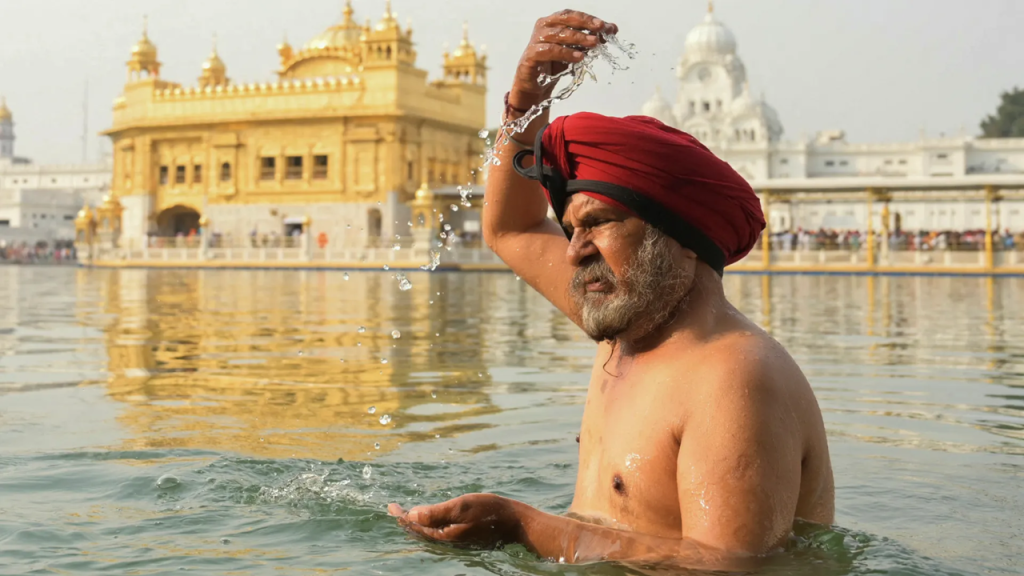
Vaisakhi (also spelled Baisakhi), celebrated on April 13th-14th, marks both the Sikh New Year and the founding of the Khalsa—the community of initiated Sikhs—making it one of the most important dates in the Sikh calendar. The day also coincides with a major harvest festival in Punjab and other parts of South Asia, connecting spiritual rebirth with the earth’s abundance. For men exploring how warrior traditions, spiritual discipline, and community identity intersect, Vaisakhi offers a powerful model of masculinity that combines courage with service, strength with humility, and fierce independence with radical equality.
The pivotal event commemorated at Vaisakhi occurred in 1699, when Guru Gobind Singh, the tenth Sikh Guru, gathered followers at Anandpur Sahib and called for volunteers willing to give their lives for their faith. Five men—the Panj Pyare (Five Beloved Ones)—stepped forward one by one, each disappearing into a tent with the Guru. When all five had volunteered, the Guru revealed them alive and initiated them into the Khalsa with Amrit (sweetened water stirred with a double-edged sword), establishing a new order of saint-soldiers committed to defending the faith and protecting the oppressed.
The founding of the Khalsa was revolutionary: it abolished caste distinctions among Sikhs, gave all men the surname Singh (Lion) and all women the surname Kaur (Princess), and established the Five Articles of Faith (the Five Ks)—Kesh (uncut hair), Kara (steel bracelet), Kanga (wooden comb), Kachera (cotton undergarment), and Kirpan (ceremonial sword)—as visible markers of Sikh identity and commitment. As a harvest festival, Vaisakhi predates Sikhism, with roots in ancient Punjabi agricultural celebrations marking the wheat harvest and the arrival of the solar new year.
Observances
Gurdwaras (Sikh temples) hold special services throughout the day, including continuous readings of the Guru Granth Sahib (the Sikh holy scripture), kirtan (devotional singing), and the Amrit initiation ceremony for Sikhs joining the Khalsa. The Nishan Sahib (the Sikh flag) at each gurdwara is lowered, the flagpole cleaned and dressed with new fabric, and the flag ceremonially raised—symbolizing renewal and recommitment.
Nagar Kirtan—public processions through city streets led by the Panj Pyare in saffron robes, with the Guru Granth Sahib carried on a decorated float—bring Vaisakhi celebration into the public square. These processions include martial arts demonstrations (Gatka), devotional music, and free food distributed to everyone regardless of faith, embodying the Sikh principle of seva (selfless service). The Langar—the communal kitchen that is a feature of every gurdwara—operates continuously, serving free meals to all who come; at Vaisakhi, these meals may feed tens of thousands. In Punjab, Vaisakhi includes Bhangra and Giddha dancing, wrestling competitions, and agricultural fairs celebrating the harvest.
Male Perspective
The Panj Pyare—five ordinary men who volunteered to die for what they believed—model a masculinity of absolute commitment: not reckless bravery but considered willingness to sacrifice everything for principle. Each came from a different caste and region, and their initiation into the Khalsa erased these distinctions; the message to men is that authentic brotherhood transcends the social categories that ordinarily divide us.
The Khalsa warrior tradition offers a distinctive integration of spiritual discipline and martial readiness: the Sikh saint-soldier is not violent by nature but prepared to use force in defense of the defenseless. The Kirpan (ceremonial sword) worn by initiated Sikhs is explicitly not a weapon of aggression but a reminder of the duty to protect—a model of masculine power held in service rather than wielded for dominance. Guru Gobind Singh’s own life embodied this: he lost all four sons to persecution but continued to serve, write poetry, and lead his community with grace under unimaginable grief.
The principle of seva (selfless service) challenges masculine ego directly: in the Langar, everyone sits on the floor together regardless of status, everyone eats the same food, and everyone takes turns cooking and cleaning. There is no head of the table. For men accustomed to hierarchy, this radical equality is both humbling and liberating. In men’s circles, Vaisakhi invites reflection on what you would die for—and more importantly, what you are willing to live for with the same absolute commitment. The harvest dimension of Vaisakhi reminds men that spiritual growth, like agricultural growth, requires patient labor, trust in seasons, and willingness to wait for what has been planted to ripen in its own time.