
- Purim
History
Purim is one of the most joyous festivals in the Jewish calendar, commemorating the deliverance of the Jewish people from a plot to destroy them in ancient Persia. The story, told in the biblical Book of Esther (Megillah), celebrates courage, hidden identity, and the reversal of fate—themes that resonate deeply with anyone who has faced persecution or discovered strength they didn’t know they possessed. For men exploring the intersection of spirituality and embodiment, Purim offers rich reflection on masks, hiddenness, revelation, and the courage to act when action is dangerous.
Purim commemorates events described in the Book of Esther, set in the Persian Empire during the reign of King Ahasuerus (often identified with Xerxes I, 5th century BCE), when the Jewish people faced annihilation. The villain Haman, the king’s chief advisor, cast lots (purim in Hebrew) to determine the date for destroying all Jews in the empire; the word “Purim” means “lots,” referring to this act of chance that determined the fate of a people.
Queen Esther, a Jewish woman who had concealed her identity to become queen, risked her life by revealing her heritage to the king and exposing Haman’s plot; her uncle Mordecai had earlier refused to bow to Haman, setting the conflict in motion. The plot was reversed: Haman was hanged on the gallows he had prepared for Mordecai, the Jews were permitted to defend themselves, and the days of intended destruction became days of celebration.
The Book of Esther is unique in the Hebrew Bible for never mentioning God directly, leading to rich interpretive traditions about divine hiddenness, human agency, and providence working through ordinary people and apparent coincidences.
Observances
The central observance is hearing the Megillah (Book of Esther) read aloud in synagogue, typically twice—once on the evening beginning Purim and again the following morning; congregants use noisemakers (groggers) to drown out Haman’s name whenever it’s mentioned.
Mishloach manot (sending portions) involves exchanging gifts of food with friends and neighbors—typically at least two ready-to-eat foods given to at least one person—strengthening community bonds and ensuring everyone has provisions for the feast.
Matanot la’evyonim (gifts to the poor) requires giving charity to at least two people in need, emphasizing that celebration must include ensuring the vulnerable can participate in the joy.
The Purim seudah (feast) is a festive meal held on Purim afternoon, featuring abundant food, wine, and celebration; tradition holds that one should drink until unable to distinguish between “cursed be Haman” and “blessed be Mordecai.”
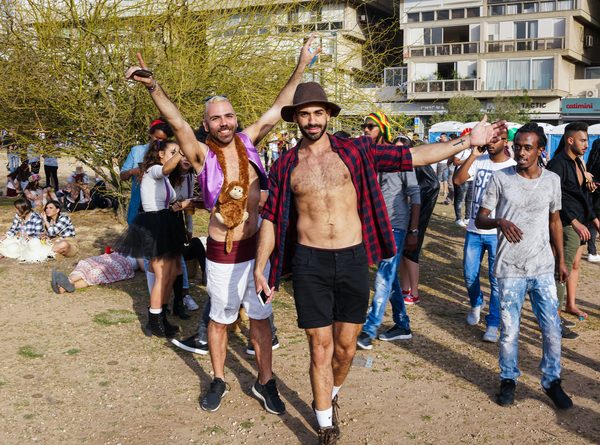
Costumes and masks are a beloved Purim tradition, with children and adults dressing as characters from the Esther story or in other creative disguises, playing with themes of hidden identity central to the narrative. Hamantaschen—triangular filled pastries said to resemble Haman’s hat or ears—are the iconic Purim food. Purim spiels (comic plays) satirizing the Megillah story are performed in many communities, and the day has a carnival atmosphere with parades, games, and general merriment.
Male Perspective
Purim’s central hero is a woman—Esther—whose courage saved her people, while the men in the story range from foolish (Ahasuerus) to wicked (Haman) to righteous but dependent on a woman’s action (Mordecai); the holiday invites men to sit with female heroism and male limitation.
Mordecai’s refusal to bow to Haman models principled resistance to unjust authority, but also sets in motion dangerous consequences for his entire community; men might reflect on when standing on principle requires considering impact on others.
The theme of hidden identity resonates with men who have concealed parts of themselves—sexuality, spirituality, vulnerability—for survival, and who must decide when and how to reveal what has been hidden.
The tradition of drinking to the point of blurred distinctions challenges men’s relationship with intoxication: is this permission for escape, or invitation into a sacred dissolution of ordinary categories that reveals deeper truth?
Purim’s carnivalesque reversal—where the powerless triumph and the mighty fall—speaks to men who have experienced both positions, inviting reflection on how power operates and how quickly fortunes can change. The requirement to give to the poor ensures that male celebration doesn’t become self-indulgent excess; joy must be shared.
Masks and costumes offer men permission to play with identity, to try on different selves, to access parts of themselves usually suppressed—the festival creates space for what ordinary life doesn’t allow.
In men’s circles, Purim might be observed through reading the Megillah together, discussing themes of courage and hidden identity, sharing food and drink generously, and allowing space for play and foolishness that masculine norms often prohibit. The absence of God’s name in the Esther story invites reflection on how the sacred works through human action, ordinary circumstances, and apparent chance.