
- Palm Sunday
History
Palm Sunday, the Sunday before Easter, marks Jesus Christ's triumphal entry into Jerusalem and the beginning of Holy Week. The day takes its name from the palm branches that crowds spread before Jesus as he rode into the city, hailing him as king and Messiah. For Christians, Palm Sunday inaugurates the most sacred week of the liturgical year; for men reflecting on Jesus's final days, it poses searching questions about the nature of triumph, the fickle quality of popular acclaim, and the courage required to walk knowingly toward suffering.
Observances
Palm Sunday commemorates events described in all four canonical Gospels (Matthew 21:1-11, Mark 11:1-11, Luke 19:28-44, John 12:12-19): Jesus entering Jerusalem from the Mount of Olives, riding on a donkey while crowds welcomed him with palm branches and shouts of "Hosanna." The event deliberately fulfilled Old Testament prophecy, particularly Zechariah 9:9: "See, your king comes to you, righteous and victorious, lowly and riding on a donkey"; Jesus's choice of a donkey rather than a war horse signaled a king of peace, not military conquest. The crowds' acclamation—spreading cloaks and palm branches on the road, crying "Hosanna to the Son of David" and "Blessed is he who comes in the name of the Lord"—echoed coronation ceremonies and expressed messianic expectation. The juxtaposition of Palm Sunday's triumph with Good Friday's crucifixion creates the week's central tension: the same crowds shouting "Hosanna" would soon cry "Crucify him," revealing the instability of popular acclaim.
Palm Sunday observance dates to at least the fourth century, with pilgrim accounts describing processions in Jerusalem; by the medieval period, elaborate Palm Sunday liturgies had developed throughout Christendom. The day is known by various names: Passion Sunday (emphasizing the suffering to come), Branch Sunday, Yew Sunday (in regions where palms were unavailable), and Domingo de Ramos in Spanish-speaking countries.
Male Perspective
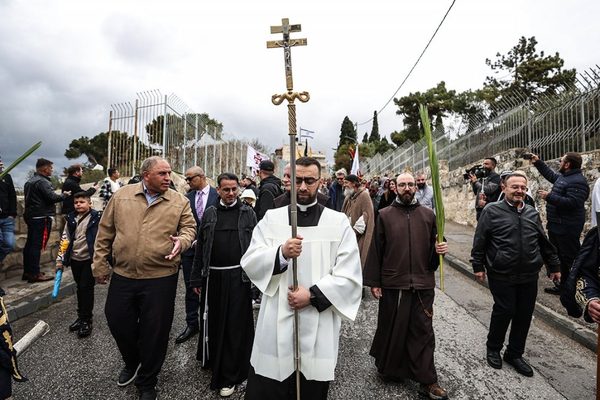
The blessing and distribution of palm branches (or substitutes like willow, olive, or yew where palms don't grow) is the day's central ritual; congregants often wave branches during processional hymns or Gospel readings. Many churches hold outdoor processions reenacting Jesus's entry, with congregants walking together waving palms; some communities include a live donkey for greater dramatic effect.
The liturgy typically includes readings of the Passion narrative from one of the Synoptic Gospels, the full account of Jesus's suffering and death, usually read dramatically with different readers taking different roles. Blessed palms are taken home and displayed in Christian households, often tucked behind crucifixes or religious images; they're considered sacred objects and are traditionally kept until the following year.
Palm crosses, woven from palm fronds, are distributed in many churches; the simple craft transforms the symbol of acclamation into the symbol of sacrifice that awaits. The palms from previous years are burned to create the ashes used on the following year's Ash Wednesday, connecting Palm Sunday to Lent's beginning in an annual cycle of triumph, suffering, repentance, and renewal. Church decorations shift to red vestments and red paraments, symbolizing both Christ's kingship and the blood of his coming Passion; the triumphant atmosphere carries an undercurrent of solemnity.
Jesus's entry into Jerusalem on a donkey rather than a war horse models a masculinity that refuses conventional power: kingship expressed through humility, authority demonstrated through service, triumph achieved through vulnerability. The crowd's fickle shift from "Hosanna" to "Crucify" warns men about the unreliability of external validation; those who base identity on popular approval will find it withdrawn when circumstances change.
Jesus walks knowingly toward his death: Palm Sunday marks his deliberate choice to enter the city where enemies await, choosing to face rather than flee the suffering ahead; such courage is available to men facing their own difficult passages. The donkey—symbol of peace rather than war, of labor rather than battle—invites men to examine their own vehicles of power: do they enter situations on war horses, seeking dominance, or on donkeys, seeking service?
The palm branches, symbols of victory and kingship, become within days the ironic backdrop to a "king" crowned with thorns and enthroned on a cross; triumph and suffering are not opposites but mysteriously connected. For men who have experienced being praised one moment and rejected the next—in careers, relationships, or public life—Palm Sunday offers theological context: this is the human pattern Jesus chose to enter and transform.
The beginning of Holy Week invites men into sustained reflection: not a single day but a full week of accompanying Jesus through Last Supper, Gethsemane, trial, crucifixion, and tomb—this is spiritual work that cannot be rushed. In men's circles, Palm Sunday might be marked by processing with branches, reading the Passion narrative together, or beginning a Holy Week practice of daily reflection on the events leading to Easter.
The connection between Palm Sunday palms and Ash Wednesday ashes reminds men that cycles complete themselves: what is waved in triumph will be marked on foreheads in penitence; death and renewal are always connected.