
- International Women's Day
History
International Women’s Day (IWD), observed on March 8th, is a global day celebrating women’s social, economic, cultural, and political achievements while marking a call to action for accelerating gender equality. Unlike Women’s History Month’s focus on the past, IWD emphasizes both celebration of progress and urgent attention to ongoing struggles. For men committed to genuine partnership with women, the day offers an opportunity to move beyond passive appreciation toward active solidarity and honest examination of how gender inequality persists in their own spheres of influence.
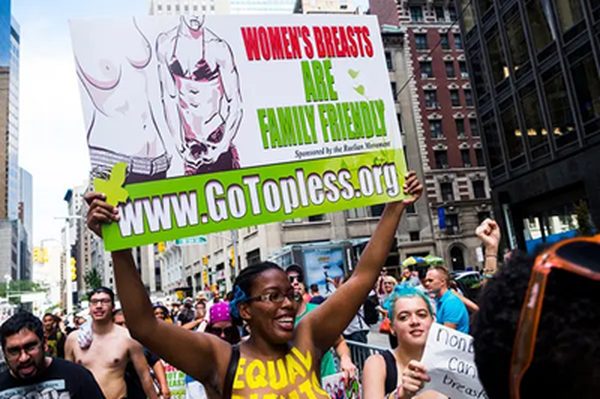
International Women’s Day emerged from labor and socialist movements of the early twentieth century, when women were organizing for better working conditions, shorter hours, and the right to vote. The first National Woman’s Day was observed in the United States on February 28, 1909, organized by the Socialist Party of America in honor of the 1908 garment workers’ strike in New York where women protested working conditions.
In 1910, at the International Socialist Women’s Conference in Copenhagen, Clara Zetkin proposed an annual International Women’s Day; the following year, over one million people in Austria, Denmark, Germany, and Switzerland rallied for women’s rights on March 19, 1911. March 8th became the fixed date after 1917, when women in Russia struck for “bread and peace” on February 23 (Julian calendar), which was March 8 on the Gregorian calendar; this strike helped spark the Russian Revolution and led to women gaining the right to vote in Russia.
The United Nations began celebrating IWD in 1975, which was designated International Women’s Year; in 1977, the UN General Assembly invited member states to proclaim March 8 as the UN Day for Women’s Rights and International Peace. The day has evolved from its labor-socialist roots to encompass broad feminist concerns including reproductive rights, gender-based violence, educational access, political representation, and intersectional attention to how gender discrimination compounds with racism, poverty, and other forms of marginalization.
Observances
In many countries, March 8th is an official holiday; in others, it’s marked by demonstrations, marches, and rallies advocating for women’s rights and calling attention to ongoing gender inequality. Workplaces and organizations hold events recognizing women’s contributions, featuring women speakers, examining gender equity policies, and sometimes offering women employees particular recognition or time off.
The day has become associated with giving women gifts—particularly flowers and small tokens—a custom especially strong in Eastern European and Russian cultures, though some feminists critique this practice as trivializing the day’s political origins. Educational institutions use the day to highlight women’s achievements in curriculum, host assemblies featuring accomplished women, and engage students in discussions about gender equality.
Media outlets publish features on women leaders, entrepreneurs, artists, and activists, and social media campaigns with annual hashtags amplify attention to women’s issues and achievements. Fundraising for women’s organizations—those addressing domestic violence, supporting women’s education, advancing reproductive health, or promoting women’s economic empowerment—often centers on IWD. Purple, green, and white—the colors of the suffragist movement—are often worn or displayed, and many events incorporate these colors symbolizing justice, hope, and purity.
Male Perspective
International Women’s Day asks men to examine their relationship to women’s equality: not as spectators applauding from a distance, but as participants whose daily choices either advance or impede the world women are working to create. The day’s labor-movement origins remind men that women’s struggles have always been intertwined with economic justice—the same systems that exploit workers often exploit women most intensely, and solidarity requires recognizing these connections.
For men in positions of authority, IWD poses practical questions: who gets hired, promoted, heard in meetings, credited for ideas, protected from harassment? Good intentions mean little without examining actual outcomes. The custom of giving women flowers or gifts on IWD has been criticized as domesticating a radical political tradition; men might instead ask what concrete support—advocacy, resource sharing, labor redistribution—would actually advance equality.
Men committed to women’s equality must examine their own relationships: who does the housework, who manages the emotional labor, whose career gets prioritized, whose voice dominates conversation? The political is personal. The day invites men to listen: to women’s experiences of discrimination, harassment, and diminishment that men often don’t see because they’re not the targets; genuine solidarity requires believing women’s accounts of their own lives.
In workplaces and organizations, men can use their privilege to amplify women’s voices, advocate for equitable policies, and challenge sexist behavior from other men—solidarity means risk, not just sympathy. In men’s circles, IWD might prompt reflection on how the circle itself relates to gender: do members see women’s equality as integral to men’s liberation, or as a separate concern? How does the circle’s culture around sexuality respect women’s full humanity?
The erotic dimension of IWD connects to larger questions about how men’s desire intersects with respect: can men desire women while genuinely honoring their autonomy, or do patterns of objectification persist beneath egalitarian language?