
- April Fools' Day
History
April Fools’ Day, observed on April 1st, is a tradition of pranks, hoaxes, and playful deception celebrated across cultures worldwide. While its exact origins remain disputed, the day invites a radical inversion of ordinary social rules: for one day, deception is not only permitted but celebrated, authority figures become targets of gentle mockery, and the fool—usually marginalized—takes center stage. For men exploring the integration of spirit and eros, April Fools’ Day raises provocative questions about masks, authenticity, the wisdom hidden in foolishness, and the erotic charge of playful transgression.
The most commonly cited origin connects April Fools’ Day to the adoption of the Gregorian calendar in 1582, when New Year’s Day moved from late March to January 1st; those who continued celebrating the old New Year became targets of jokes and were called “April fools.” However, references to foolish errands on April 1st appear in Chaucer’s Canterbury Tales (1392) and in Dutch traditions predating the calendar change, suggesting deeper roots.
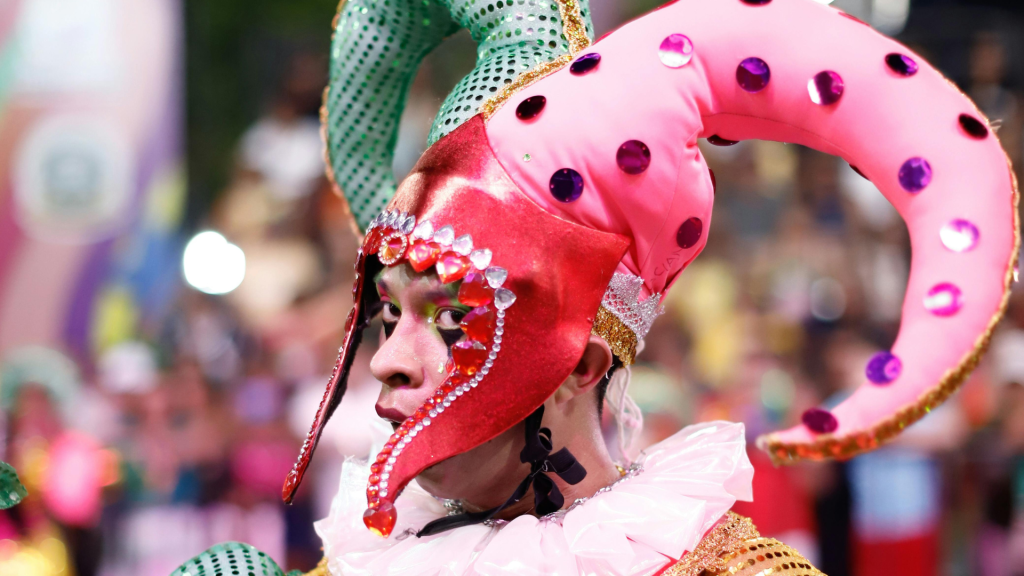
The ancient Roman festival of Hilaria (March 25th), celebrating the resurrection of Attis with games and masquerades, may be an ancestor. The Hindu festival of Holi, with its sanctioned chaos and color-throwing, shares April Fools’ spirit of permitted misrule. Medieval European “Feast of Fools” traditions, where lower clergy mocked church hierarchy and a “Lord of Misrule” presided over inverted social order, created sacred space for what was normally forbidden. The court jester or fool held a unique position in medieval and Renaissance courts: the only person permitted to speak truth to power, precisely because his role as “fool” made his words officially meaningless even when they were the most honest voice in the room.
Observances
Pranks range from the personal and intimate—family members tricking each other at breakfast—to the elaborate and public: newspapers publishing fake stories, corporations announcing absurd products, and broadcasters airing fictional reports with straight-faced solemnity. In France, the tradition of “poisson d’avril” (April fish) involves secretly taping paper fish to people’s backs; in Scotland, the “hunt the gowk” tradition sends victims on fool’s errands carrying sealed messages that read “send the fool further.”
Media organizations have produced legendary hoaxes: the BBC’s 1957 “spaghetti harvest” report showed Swiss farmers picking spaghetti from trees, convincing thousands of viewers. Corporate April Fools’ announcements have become an anticipated annual tradition, with companies competing for the most creative fictional product launches. In many workplaces, the day provides rare permission for humor and playfulness in otherwise serious environments. The unwritten rule that pranks must end by noon (observed in some traditions) creates a boundary that makes the transgression safe—chaos is permitted, but contained.
Male Perspective
The archetype of the Fool or Trickster is one of the most important figures in masculine psychology: the one who disrupts, who refuses to play by the rules, who reveals truth through absurdity and finds wisdom in what serious men dismiss. Men who have built their identities around competence, control, and being taken seriously may find April Fools’ Day uncomfortable—which is precisely why it matters; the day asks: what are you afraid of losing if you play the fool?
The erotic dimension of foolishness is real: play, spontaneity, and willingness to be ridiculous are essential to erotic vitality; men who cannot be playful often cannot be truly intimate. Pranking requires intimacy—you must know someone well enough to surprise them, and the laughter that follows a good prank creates connection that earnest conversation sometimes cannot. For men in circles of trust, April Fools’ Day offers permission to drop the mask of the competent adult and reconnect with the boy who found joy in mischief and discovered the world through play.
The Trickster appears across mythologies—Hermes, Loki, Coyote, Anansi—always as a figure who crosses boundaries, breaks taboos, and creates new possibilities precisely by refusing to respect the established order. In men’s spiritual work, encountering the inner Trickster means befriending the part of oneself that resists domestication, that sees through pretension, and that knows the deepest truths are often spoken in jest. April Fools’ Day, beneath its silliness, preserves an ancient wisdom: that the man who cannot laugh at himself has not yet learned the most important thing about being human.